
By Dr. Manish Shrivastava
The first memories between India and Indonesia began long before embassies, official visits and formal agreements. They began with the sea. Traders, monks, scholars, craftsmen, storytellers and pilgrims carried more than goods across the water. They carried words, scripts, gods, stories, food habits, and ways of seeing the world.
Somewhere in this movement of people and ideas, the figure of Rishi Agastya also entered the Indonesian imagination. In Java, he came to be remembered as a teacher, a bearer of Hindu knowledge, discipline and spiritual learning. His presence in temple traditions, including Prambanan, shows how deeply Indian thought reached the islands before gradually becoming something uniquely Indonesian.
The old kingdoms strengthened these connections. Sriwijaya in Sumatra became an important centre of Buddhist learning with close ties to Nalanda in India. In Java and Bali, the Ramayana and Mahabharata found new life in dance, theatre, sculpture, names and ritual. When an Indian stands before Borobudur or Prambanan, there is often a strange feeling of recognition. The stories are familiar, yet their expression is unmistakably Indonesian.
Rabindranath Tagore must have felt something similar when he travelled through Java and Bali in 1927. Perhaps because he was a poet, he noticed what hurried visitors often miss. He saw temples, dance, music, rituals and village life, but above all he noticed the quiet discipline with which beauty was woven into everyday living. He recognised echoes of India, yet each one had found an Indonesian voice. The epics remained, but they moved with Javanese grace. Hindu thought survived, but in Bali it breathed through local ceremonies, offerings, community life and reverence for nature. Gamelan had its own patience. Dance had its own silence. The body moved slowly, the face remained calm, yet the story still reached the heart.
I have often felt the same. In Indonesia, the past rarely announces itself. It sits quietly inside names, ceremonies, temples, family customs and even in the way people allow time to do its work.
The years of independence gave this ancient cultural closeness a deeper emotional meaning. India and Indonesia both knew the weight of colonial rule. People in both countries understood what it meant for outsiders to control land, trade, movement, education and dignity. Indonesia proclaimed independence in 1945 and fought a long struggle for international recognition. India reached freedom only two years later. Across Asia, societies were reclaiming their own voices after generations of foreign rule. India’s support for Indonesia came not only from diplomacy, but from shared historical memory – the love of one old civilization for another seeking to recover its place in the world. Water separated the two countries; the languages and colonial histories were different, but the feeling behind freedom was remarkably similar.
After independence, the relationship acquired an official framework. For those who have lived between the two countries, however, it has always revealed itself in smaller, quieter ways.
I have seen it in Indonesian names like Dewi, Putri, Indra, Wisnu, and Surya.
I have seen it in a Ramayana performance in Java where the story begins in India, but the movement, music, and mood belong entirely to Indonesia.
I have seen it in Bali, where a visitor from India may hear familiar mantras but see a different rhythm of worship, offerings, temple life, and community discipline.
I have seen it in Jakarta, where Indian food, films, yoga, Ayurveda, business, education, and family networks sit quietly beside Indonesian warmth, Bahasa, manners, and hospitality.
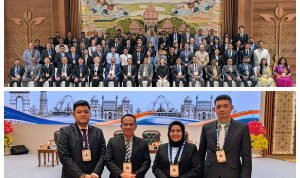
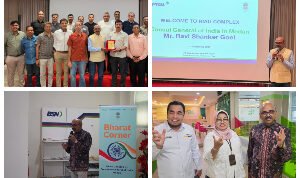
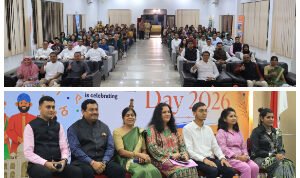
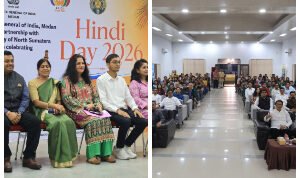
The July visit from India to Indonesia enters this living tradition. For me, it touches something I have experienced in everyday life for many years.
I arrived in Indonesia as an ordinary Indian professional. The first thing the country challenged was my sense of speed. I came with the Indian habit of asking quickly, deciding quickly, following up quickly and assuming that if something was clear to me, it should quickly become clear to everyone else.
Indonesia did not argue with that habit. It simply made me wait.
A conversation would begin with tea. A decision would emerge after many small exchanges. Even a “yes” needed time. A nanti could mean many things. At first, I became restless. Slowly I realised that people were not testing my efficiency; they were quietly discovering whether I could be trusted, whether I could listen and whether I could remain calm when life refused to follow my timetable.
During my first Idul Fitri, I heard people say, “Mohon maaf lahir dan batin.” It reminded me of the Jain phrase “Micchāmi Dukkaḍaṃ” – asking forgiveness for any hurt caused knowingly or unknowingly. The language was different. The faith tradition was different. Yet the feeling was instantly familiar.
I saw families visiting elders, carrying food, asking forgiveness, speaking gently and placing relationships above ego. I had seen the same values in Indian homes – sometimes during festivals, sometimes after family disagreements and often in the quiet respect shown to elders without anyone explaining why. These small experiences became the soil from which my book, Sabar, Sambal & Survival, slowly grew.
Today, when I think about India and Indonesia, I see the relationship through these small moments. An Indian learning Bahasa before entering an Indonesian home. An Indonesian friend explaining a local custom without making a foreigner feel foolish. A family meal where sambal sits beside Indian food and somehow both belong on the same table. A festival greeting that carries the same spirit of forgiveness I had heard in another language back home.
Indonesia taught me new ways of understanding people, hierarchy, respect, humour, food, faith, family, language and belonging. In India, I had often heard the saying, “Sabr ka phal meetha hota hai” which means that the fruit of patience is sweet. After living in Indonesia, I came to understand it differently. Here, patience is never preached. It arrives with waiting, tea, silence, family, food, a smile and sometimes a little sambal on the side. By the time it reaches you, it is no longer only sweet.
It has flavour!
(Dr. Manish Shrivastava is an Indian author and professional based in Jakarta, Indonesia. He has lived and worked in Indonesia since 2008 and has spent more than three decades in Ayurveda-based healthcare, including over a decade leading Himalaya’s Indonesia business and helping introduce Ayurveda-based healthcare products to the Indonesian market. He has authored 14 books, including a ten-book series, Krantidoot, on lesser-known Indian freedom fighters. His forthcoming book, Sabar, Sambal & Survival, reflects his lived experience of Indonesia and the cultural connections between India and Indonesia.)